Alright, let's talk about the Phenyx Pro PDP-1. If you've been following the page, you know we're moving away from gaming and IRL talking-head stuff and into product reviews and maker content. That means the studio's been getting a full rework: a new workspace, multiple cameras, lights, and mics. I was hunting for a solid lapel mic when Phenyx Pro actually reached out and offered to send me theirs. I'll be honest, this thing surprised me.
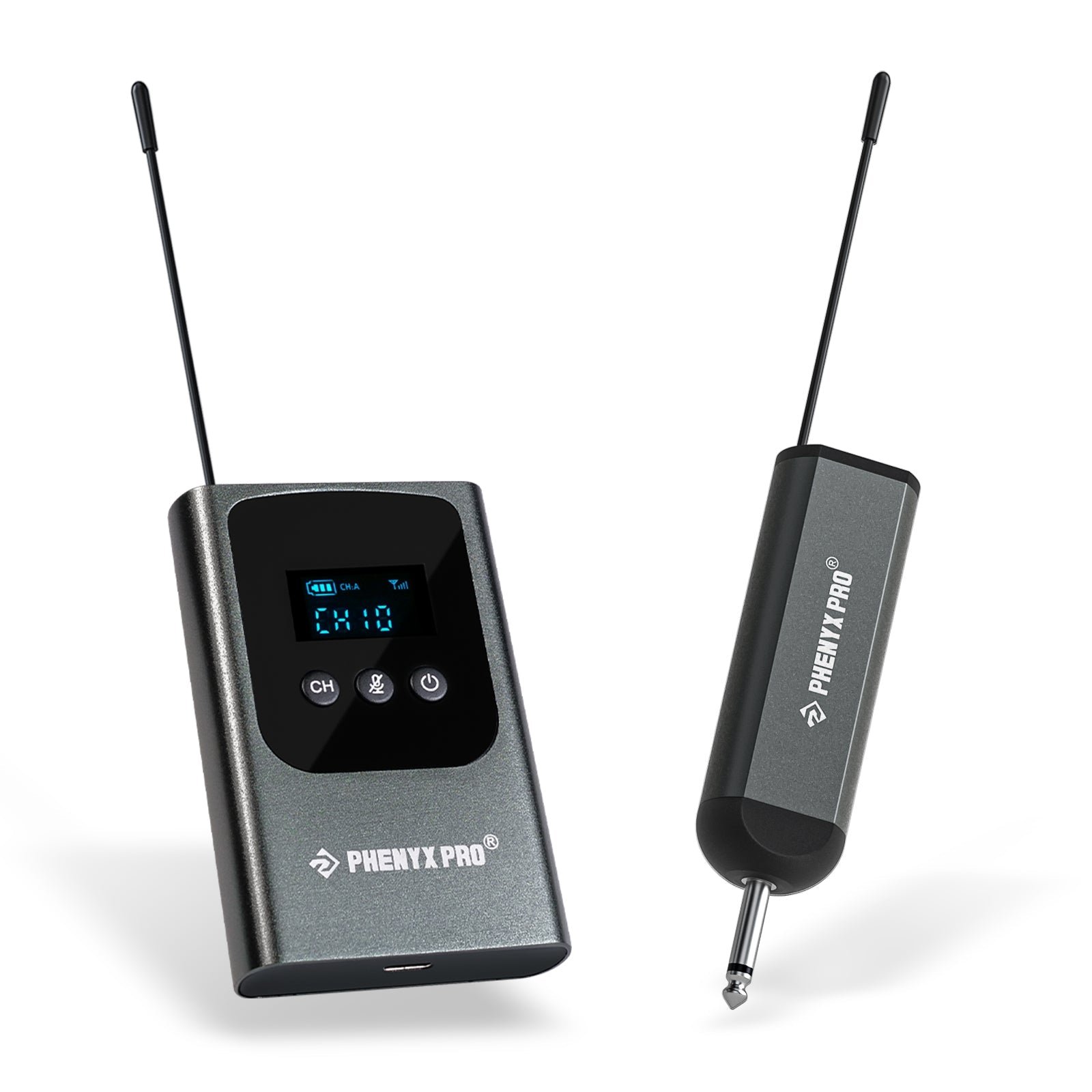
First thing I noticed was the packaging. It feels premium, and so does everything inside the box. Nothing about it feels cheap. In the box you get one receiver with a 6.35mm (quarter inch) plug, one body pack transmitter, a headset mic, a lapel/lavalier mic, and a split USB-C cable that charges both units at once off a single brick. That last one sounds small, but after a while you start running out of bricks, so I'll take it.
Build quality is legit. It's a mix of full metal and hard plastic, and it feels durable. I'm not going to go chucking it on the floor, but I honestly think it could take a solid tumble and keep working. The mic connects with a 3-pin mini connector, which I really like, because if the cable gets snagged or you move wrong, it's not going to rip right out of the transmitter.
On specs, you're getting 48kHz/24-bit audio over UHF, a wireless range of 200ft, and from what I can tell a 1500mAh battery in the receiver and a 550mAh battery in the transmitter. Battery life is solid. Phenyx says it charges from zero in about three hours, and I tested that myself. I ran it all the way down to zero before recording, and it took right around 2 hours and 47 minutes to get back to 100. It also auto-detects the channel your mic is set to and picks it right up, which is one less thing to fiddle with.
Heads up, this system is designed for live performance. But if you've got an audio interface with a quarter-inch input, you can plug it right into your recording or streaming setup, which is exactly how I'm running it.
Sound is where I'll be straight with you. I monitored it raw, with no editing, no mastering, nothing touched, and to my ears it sounded a little tinny. I even did a side-by-side with my Samsung Galaxy S20 Ultra (yeah, old phone, but it gets the job done), and out of the box the phone was maybe a touch crisper. With a little post-processing and some time on the mastering, though, you can make this sound like a way more expensive setup. Everybody's ears are different, but here's what we can all agree on: you can live through bad video, but you can't live through bad audio. If I can't listen to it, I'm not watching it.
For what it's worth, Amazon has it at 4.3 out of 5 stars across 544 global ratings, with sound quality as the most praised feature, followed by value for money, ease of use, and battery life. That lines up pretty well with my experience.
The headset mic honestly isn't my thing, and you won't catch me wearing it on camera anytime soon. If you're doing live performance, though, it's not bulky, it's comfortable, and it looks pretty good. Having both mic styles in one box is a nice bonus.
Bottom line: the price is the big win here. For somewhere around $50 to $70 depending on sales, you're getting a wireless lav setup that looks, feels, and sounds professional and plays nice with pro gear. You're not buying cheap plastic that breaks the first time you drop it. The raw sound is a little thin, but a bit of editing fixes that. Is it worth your time and money? Absolutely. Do your own research, but I'd recommend it.
Overall: 8.5/10